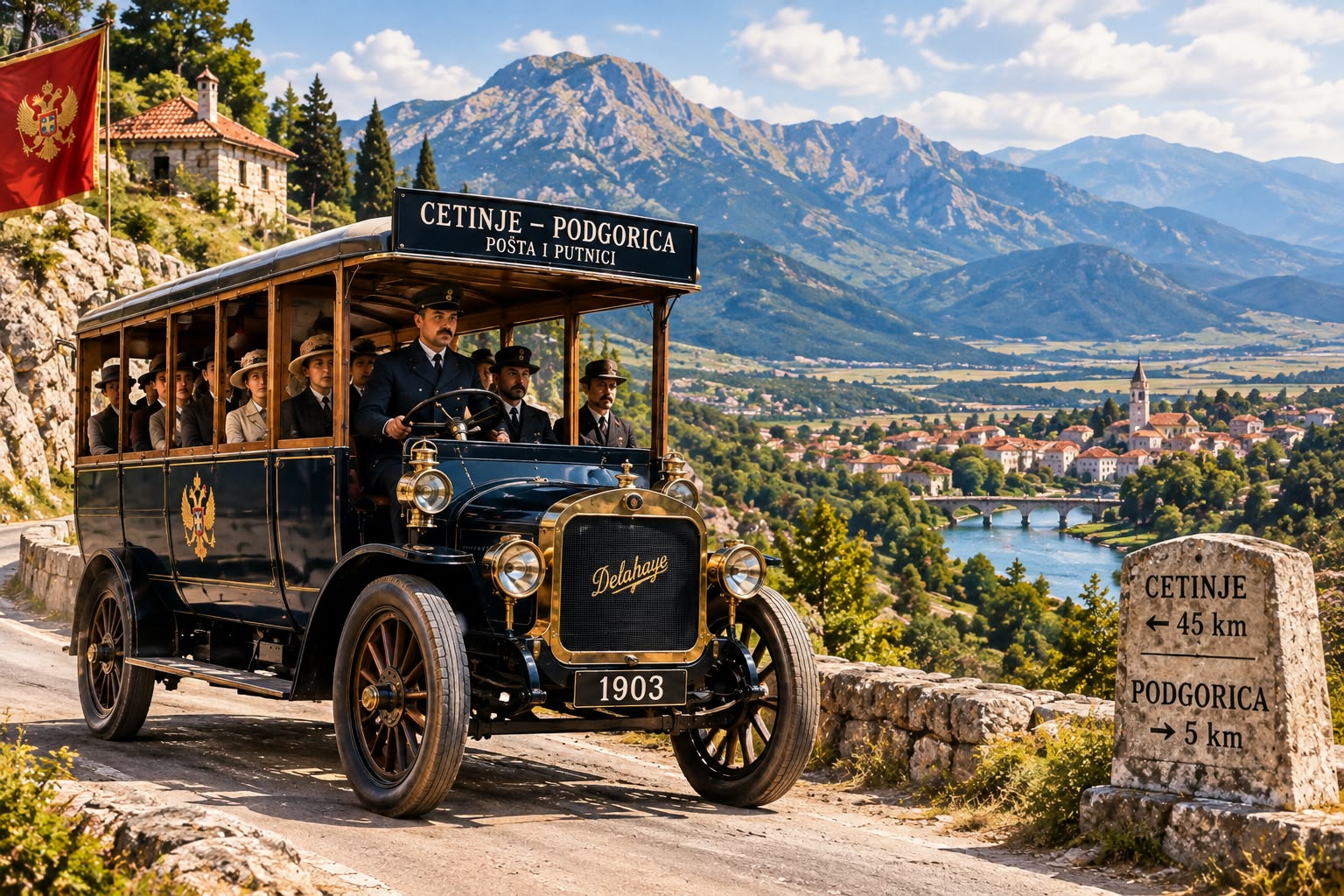
Montenegro’s First Motor Service (1903) – Cetinje to Podgorica
Montenegro’s First Motor Service (1903) – Cetinje to Podgorica
Montenegro’s First Motor Service in 1903,
IL NAUTICS Lux Limo Service
Montenegro is A Pioneer of European Motor Transport
The First State Operated Motor Service Between Cetinje and Podgorica 1903
A Royal Vision. A Historic Journey. A Legacy That Still Moves Montenegro.
Long before luxury limousines, modern motorways and private chauffeur services became part of everyday travel, the small Balkan principality of Montenegro was already making its mark on European transport history.
In 1903, during the reign of Prince Nikola I Petrović-Njegoš, later King Nikola I,
Montenegro introduced an innovative state operated motor service for transporting both passengers and mail.
The historic service connected Cetinje, the Old Royal Capital, with Podgorica, marking an important milestone in the development of motorised public transport in the region.
At a time when horse drawn carriages remained a familiar sight across much of Europe, Montenegro was embracing a new era of mobility.
The Beginning of a New Era
The introduction of motorised transport represented far more than a technological innovation.
It reflected Montenegro's ambition to modernise its public services, strengthen communication between its towns and connect its people through faster, more efficient travel.
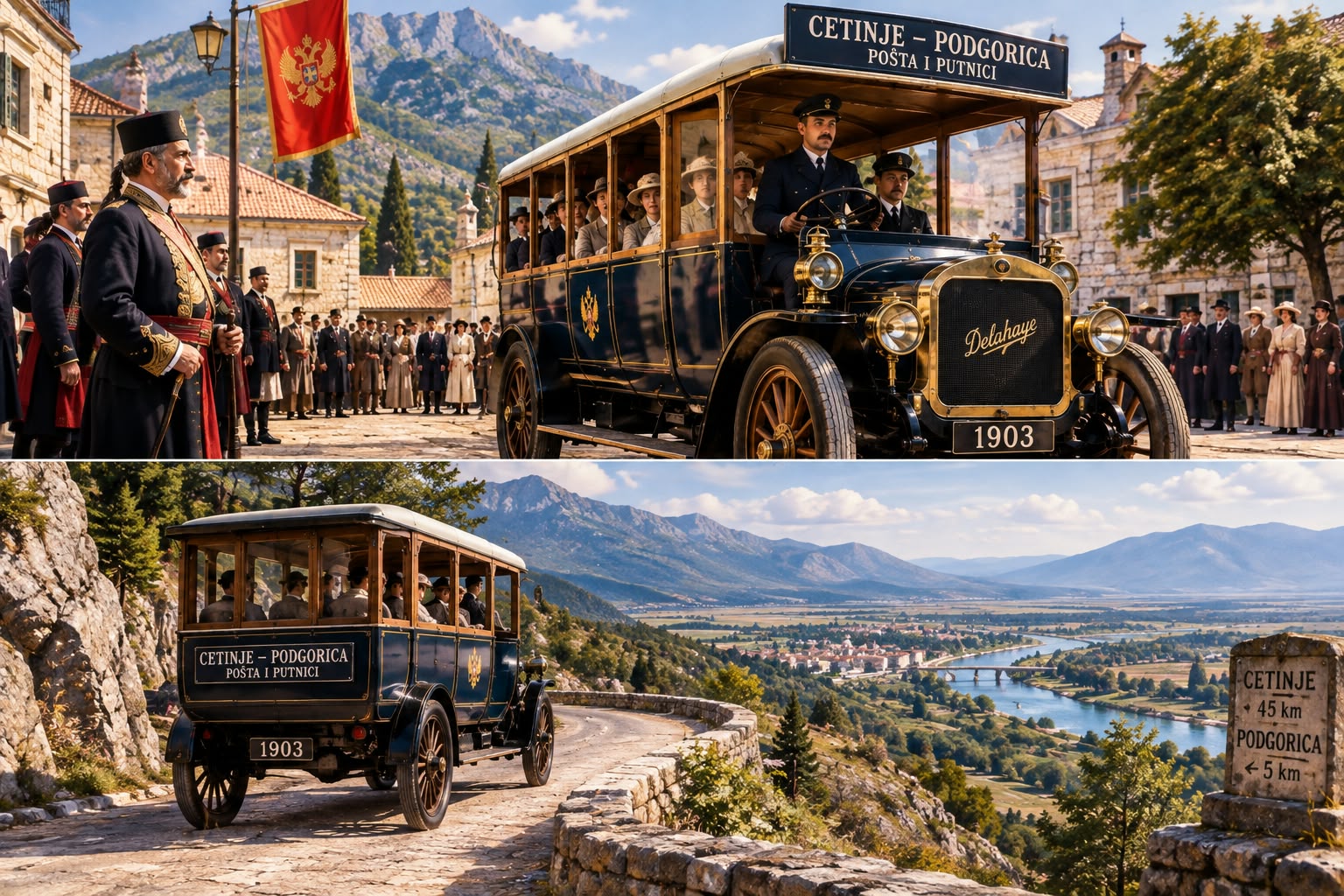
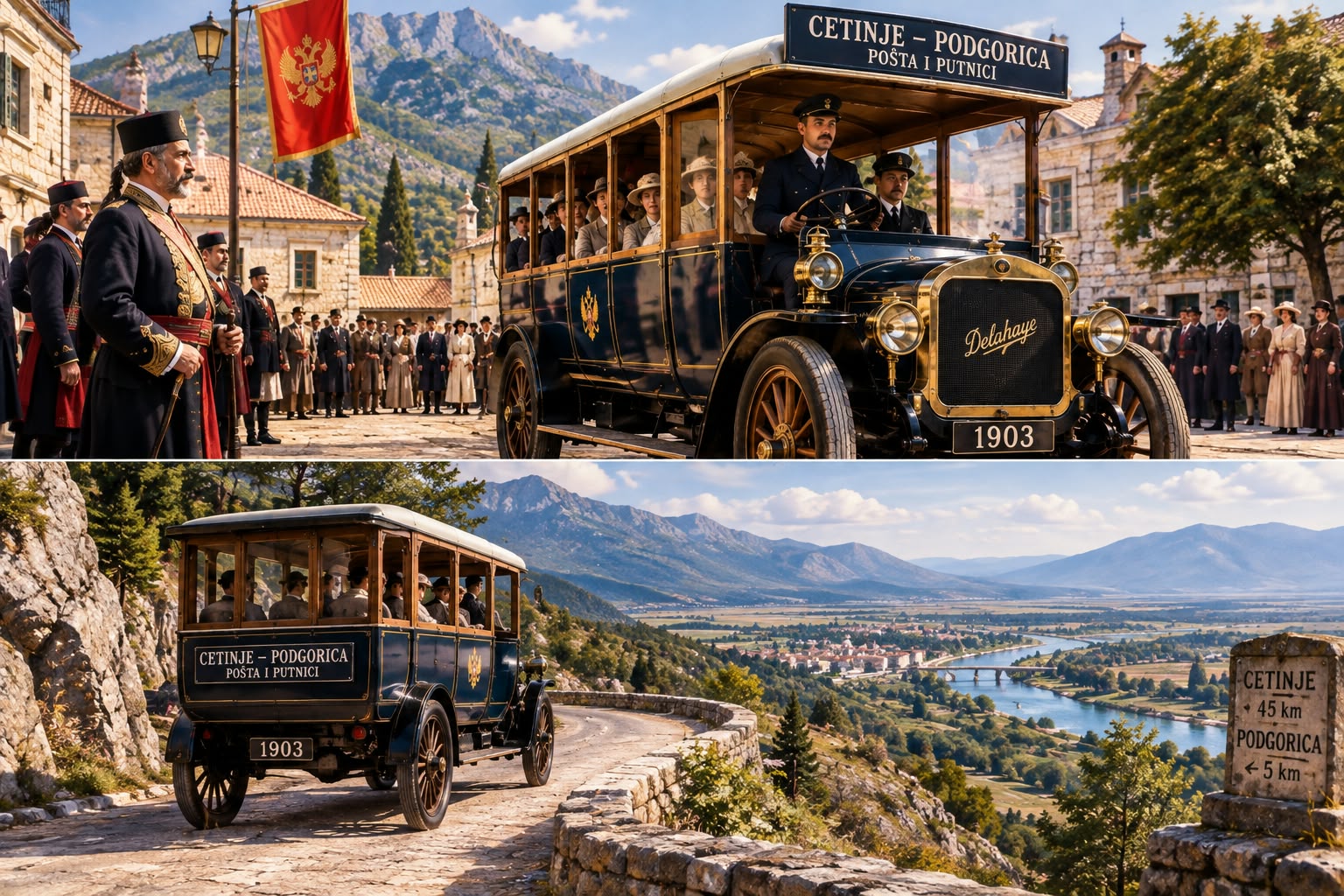
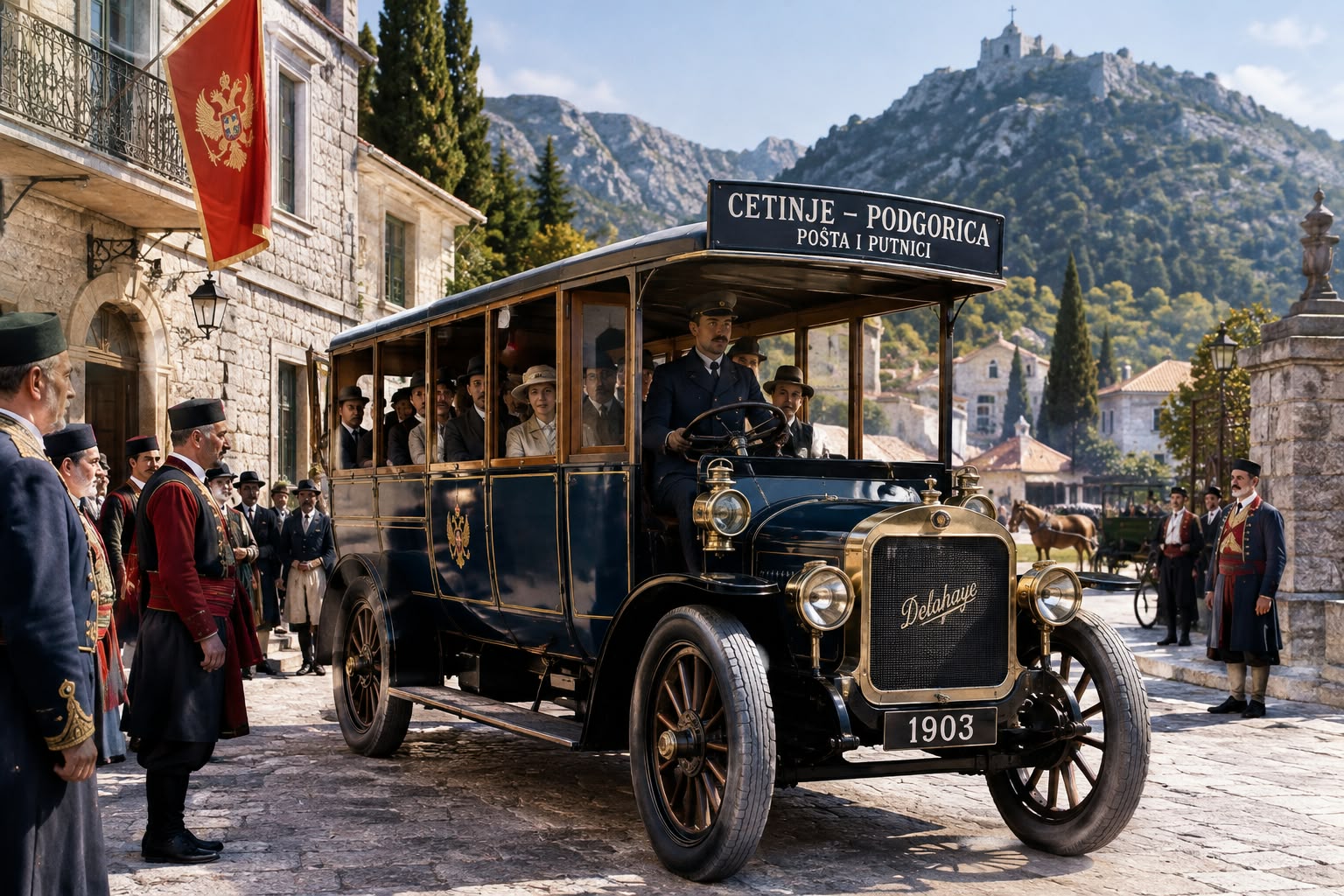
Automobiles manufactured by the French company Delahaye were acquired for the service, replacing traditional horse drawn transport on designated routes. These pioneering vehicles carried mail and passengers, bringing a new dimension to travel in the Montenegrin landscape.
The service officially began in June 1903, and its arrival attracted enormous public curiosity.
For many people, the automobile was an extraordinary sight a vehicle that moved without horses, opening the door to a completely different future.
Milo Tomanović is Montenegro's First Chauffeur
One of the central figures in this remarkable story was Milo Tomanović, a young man from Cetinje who became known as Montenegro's first chauffeur and mechanic.
Under the initiative of Prince Nikola, Tomanović travelled to what is now the Czech Republic to learn the skills required to operate and maintain motor vehicles.
His return marked the arrival of a new profession in Montenegro. He was not simply a driver, he represented a generation ready to embrace technology, technical knowledge and the changing demands of modern society.
When the first automobile arrived in Podgorica, curious residents gathered to witness the unusual machine. Contemporary accounts describe people rushing into the streets to see what they called a “carriage without horses.”
It was a moment when history could be heard approaching along the road.
The Historic Road Between Cetinje and Podgorica
The connection between Cetinje and Podgorica has always held special significance in Montenegro's history.
Cetinje, nestled beneath the dramatic slopes of Mount Lovćen, was the country's historic royal and political centre. Podgorica, situated in the fertile Zeta plain, was an important settlement and commercial hub.
The route linking these two cities crossed a landscape of rugged mountains, stone built settlements and spectacular views a reminder of the challenges faced by early travellers.
In 1903, motorised transport helped transform the experience of moving between these important centres. What had once depended on traditional transport methods became part of a new chapter in Montenegro's technological development.
Today, visitors can travel between Cetinje and Podgorica in modern comfort with IL NAUTICS Lux Limo Service, while still experiencing the landscapes that shaped the country's remarkable past.
King Nikola I and Montenegro's Modernisation
King Nikola I, who ruled Montenegro from 1860 until 1918, sought to strengthen his country's institutions and encourage progress in education, communications and public administration.
During his reign, Montenegro developed its postal and telegraph services and embraced new technologies that helped connect it with the wider European world.
The introduction of motorised passenger and mail transport in 1903 became one of the most memorable examples of this modernising ambition.
Montenegro was a small country, but its willingness to adopt emerging technologies demonstrated that innovation was not limited to Europe's largest and wealthiest nations.
Its early motor service remains a fascinating chapter in the history of transportation in the Balkans.
From the First Motor Cars to Modern Luxury Travel with IL NAUTICS Lux Limo Service.
More than a century has passed since those pioneering automobiles travelled the Montenegrin roads.
Today, the journey between Cetinje and Podgorica can be enjoyed in the comfort of a modern luxury vehicle, with opportunities to discover royal heritage, historic architecture, traditional Montenegrin culture and breathtaking mountain scenery along the way.
At IL NAUTICS Lux Limo Service, we believe that exceptional travel is about more than reaching a destination. It is about understanding the stories, people and traditions that make every journey meaningful.
Our approach combines professional private transportation with a passion for Montenegro's history, culture and natural beauty.
Whether you are exploring the Old Royal Capital of Cetinje, discovering the streets of Podgorica or travelling along Montenegro's spectacular coastal and mountain routes, every journey offers an opportunity to experience the country from a different perspective.
Discover Montenegro Through Its History
The story of the 1903 motor service ( first Bus ) is a reminder that Montenegro has long looked towards the future while preserving its distinctive identity.
From Milo Tomanović behind the wheel of an early French automobile to today's modern private transportation, the spirit of discovery continues.
IL NAUTICS Lux Limo Service is Your Journey in Montenegro, Our Commitment.
Arrive in comfort. Discover the history. Experience Montenegro.
Montenegro’s First Bus Motor Service in 1903 – IL NAUTICS – Lux Limo Service (1)
Montenegro’s First Bus Motor Service in 1903 – IL NAUTICS – Lux Limo Service (2)